Your browser doesn't support the features required by impress.js, so you are presented with a simplified version of this presentation.
For the best experience please use the latest Chrome, Safari or Firefox browser.
In this lesson, you will be introduced to the perception of depth, color, motion.
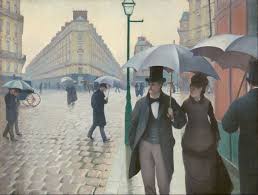 This painting uses a monocular depth cue called a texture gradient to enhance depth perception.
(“Paris Street, Rainy Day,” Gustave Caillebotte, 1877. Art Institute of Chicago.)
This painting uses a monocular depth cue called a texture gradient to enhance depth perception.
(“Paris Street, Rainy Day,” Gustave Caillebotte, 1877. Art Institute of Chicago.)
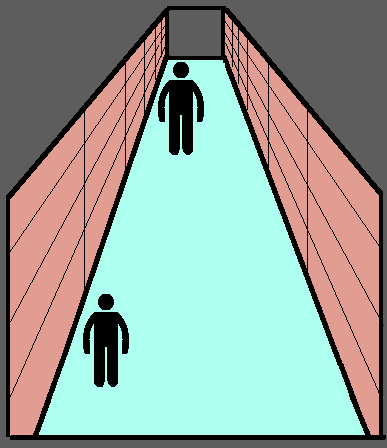
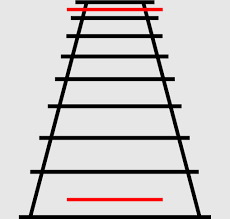 The Ponzo illusion: The upper red bar appears to be longer, but both are the same length.
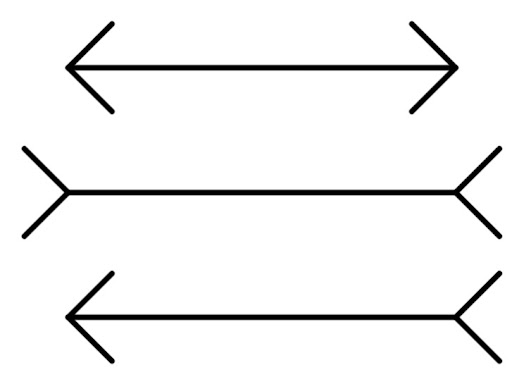 The Muller-Lyer illusion: The lower horizontal segment appears to be shorter than the one above, but they are the same
length.
The Muller-Lyer illusion: The lower horizontal segment appears to be shorter than the one above, but they are the same
length.
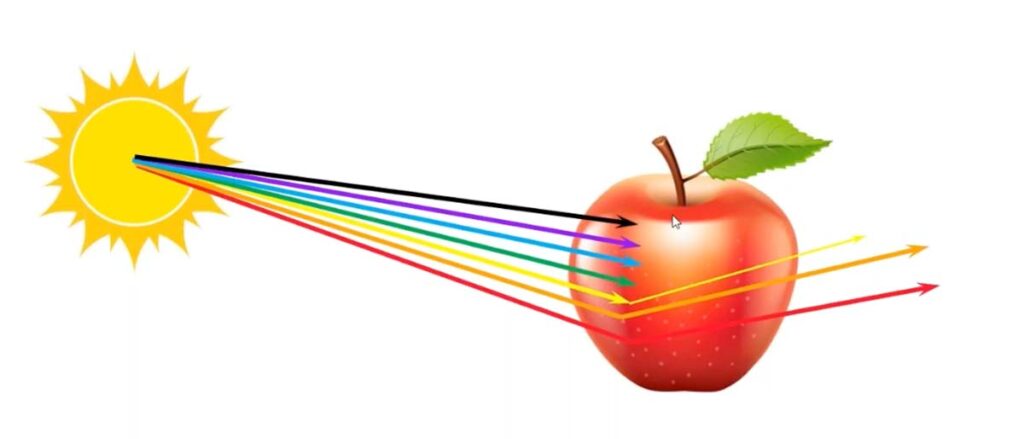
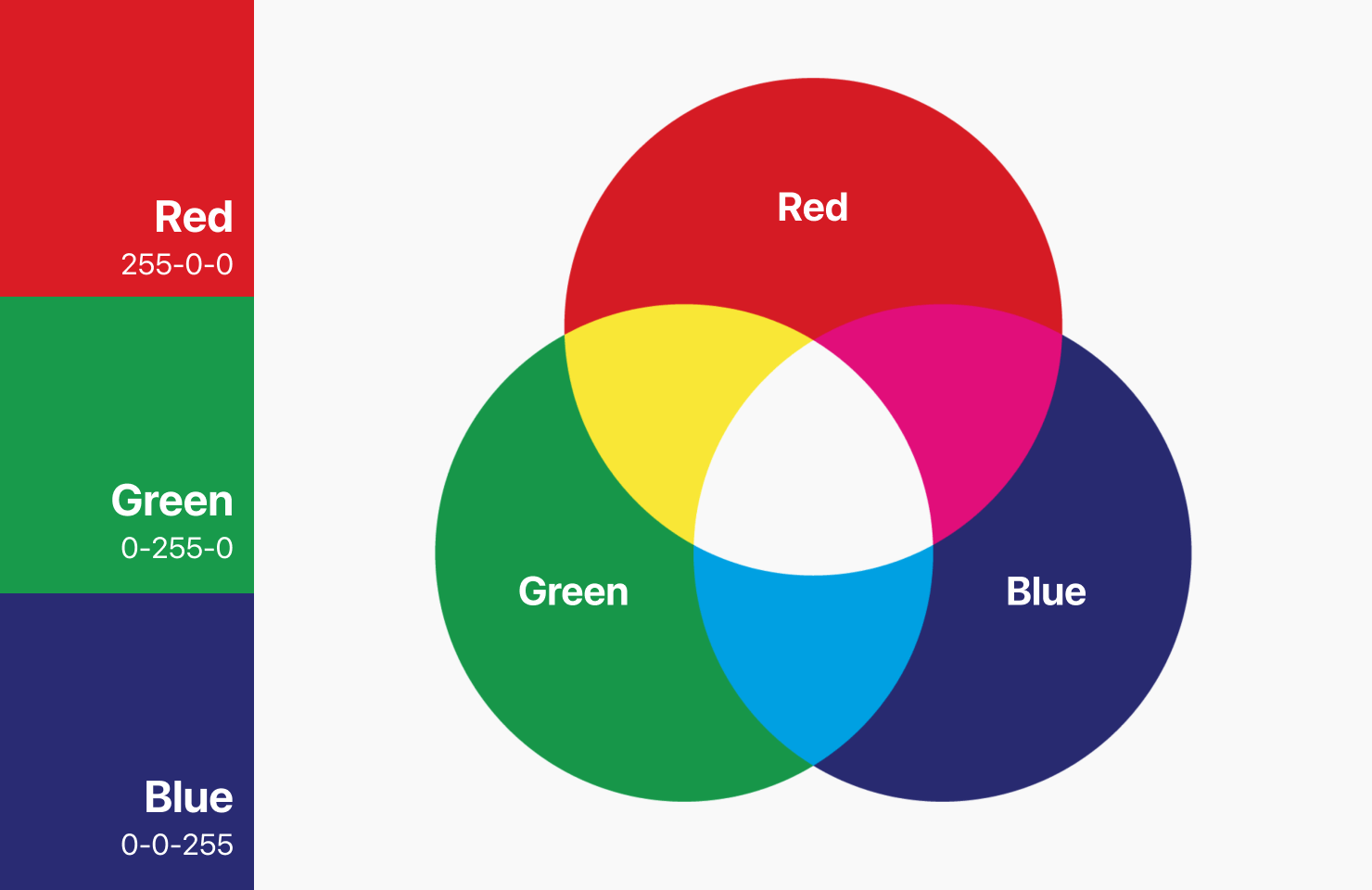
| color | +second color | product color |
|---|---|---|
| red | blue | purple |
| red | yellow | orange |
| red | green | brown |
              _ in the ganglion layer and LGN detect simple features
 in different spots in the retinal image.
      A measure of how many individual frames are displayed or processed per second.
      Refers to the physical size of the image of an object as it is projected onto the retina.
      The conclusion that can be drawn from something although it is not explicitly stated.
              What is the body’s ability to estimate its own motions due to motor commands,

               which includes the use of eye muscles in the second case.
Once how many FPS  are reached, the motion is obviously more smooth and we start to lose

               the  ability to distinguish individual frames?
Use a spacebar or arrow keys to navigate